
A fit, in-form player who has just played an IPL final can be out of a franchise's playing XI within six weeks of the next season starting, and the franchise will have done nothing wrong. The IPL calendar is built around a fixed set of windows — retention declarations, the pre-auction shortlist, the mega-auction itself, mid-season injury review, the replacement window, and the impact-player substitution — and each window reshapes the pool of names that fantasy managers can pick from. Understanding the windows turns a steady drip of player news into a usable read.
This is a reference explainer for what each window actually controls, which decisions a franchise can reverse and which it cannot, and the small set of dates that move the fantasy market more than any form run.
The calendar of windows that moves the pool
The IPL operates on a layered calendar. Behind the headline fixtures sits a quiet sequence of administrative windows, each with its own rules on who can be moved, in what direction, and on what terms. For fantasy managers, the four windows that matter most are the retention window, the auction window, the mid-season replacement window, and the impact-player substitution rule. A fifth — the domestic guest-player route — sits outside the IPL itself but shapes the season's talent pipeline.
| Window | When it opens | Who can move | What it changes for fantasy |
|---|---|---|---|
| Retention declarations | About 4–6 weeks before the auction | Players already contracted to a franchise | Sets the floor of each squad before any auction activity |
| Pre-auction shortlist | Days before the auction | Released players entering the pool | Defines which names will appear on the auction table |
| The auction itself | Once per season (mega-auction every few years) | Players on the released list | Resets squad economics, captaincy hierarchy and role splits |
| Mid-season replacement | After each team's first ~3 matches | Injured or unavailable players | Forces a temporary re-pick from the squad bench |
| Impact-player substitution | Every match, before the toss | One named XI player (any role) → one named impact player (opposite role) | Allows in-game tactical reshuffle without a like-for-like swap |
| Domestic guest-player route | Outside IPL, before domestic season | India-associated players between state associations | Adds bench depth mid-season and affects auction price for next cycle |
Reading the table in order: a season's fantasy pool is the residue of six distinct decisions taken in six different rooms. Treating each as a separate decision, instead of a single "auction" event, is what lets a manager plan more than one or two transfers ahead.
Retention and the floor of each squad
Retention is the only window in which a franchise acts from a position of strength. The franchise chooses which contracted players to keep, at what price, and how many slots to use. The BCCI framework sets the maximum number of retentions per cycle, and each retention slot has a price band that rises with the player's category. Mega-auction years reset the entire pool; non-mega years use a smaller retention allowance plus a Right to Match (RTM) card for any player the franchise wants to keep but cannot afford under retention pricing.
For fantasy, the retention list is the first real signal of a franchise's intent for the season. A franchise that retains four top-order batters is telling the auction table it intends to bowl first; a franchise that retains three seamers and an all-rounder is signalling a slower, lower-scoring template. Reading retention lists alongside the captaincy appointment, which usually follows within a week, gives a clearer squad shape than either signal alone.

The mid-season fitness review
Once the auction settles and the season begins, the next decision point is the fitness review. Each franchise carries a small medical and sports-science staff whose job is to clear, restrict or sideline each squad member before and during the season. A fitness review can result in three outcomes: cleared to play, restricted workload, or ruled out for the season. The third triggers the replacement window.
The fitness review window is the one most fantasy managers mis-time. The temptation is to bench a player the moment an injury report appears; the more reliable read waits for the franchise's formal clearance note. A "ruled out for two matches" note is not the same as a "ruled out for the season" note, and the difference is the difference between one missed captaincy cycle and a season-long absence.
Workload restrictions matter more than is usually credited. A seam-bowling all-rounder cleared to bat but restricted to two overs instead of four is a different fantasy asset — the points math shifts by 15–25 points per match, which is enough to move captaincy markets. The franchises that publish their fitness notes early (most do, in pre-match press briefings) tend to be the franchises whose fantasy output is the most predictable. The ones that hold the notes back tend to surprise.
The replacement window and the bench economy
When a player is ruled out for the season through injury, the franchise can bring in a replacement from outside the squad, subject to a price ceiling linked to the original player's auction price. The replacement is signed for the remainder of the season and cannot be retained by the franchise for the next cycle, although the rules have shifted around this point in recent years and the exact mechanism is worth re-reading at the start of each season.
For fantasy managers, the replacement window is a buying opportunity and a selling signal at the same time. The replacement is usually a less-heralded name who now has a clear role and a price ceiling that does not reflect it. The injured player, meanwhile, is a sell-and-hold candidate: his auction value for the next cycle will reset to whatever the franchise can afford, and that price rarely recovers fully from a serious mid-season injury. Captain markets on the replacement are usually mispriced for the first two or three matches, which is the window in which a careful read of his domestic record pays off.
Impact-player substitution: the only in-game window
The impact-player rule is the one window that opens every match. Each franchise names eleven players on the team sheet and one impact player; before the toss, the captain nominates which of the eleven will be replaced by the impact player, with the constraint that the swap must be across roles — a batter cannot replace a batter, a bowler cannot replace a bowler. The substitution is allowed regardless of the match situation, although in practice it is used most often when the batting order is collapsing or the bowling attack needs a sixth option.
The fantasy implication is concrete: the impact-player slot is the cheapest captaincy differential on the platform. A player named as an impact player is often picked by less than 5% of fantasy teams in the contest, which means a successful impact substitution produces a much bigger rank swing than a same-role captain pick would. The most reliable read is to look at the venue, the toss and the likely bowling workload before the substitution, and to treat the impact player as a second captain rather than a bench player.
Milestones as signal, not headline
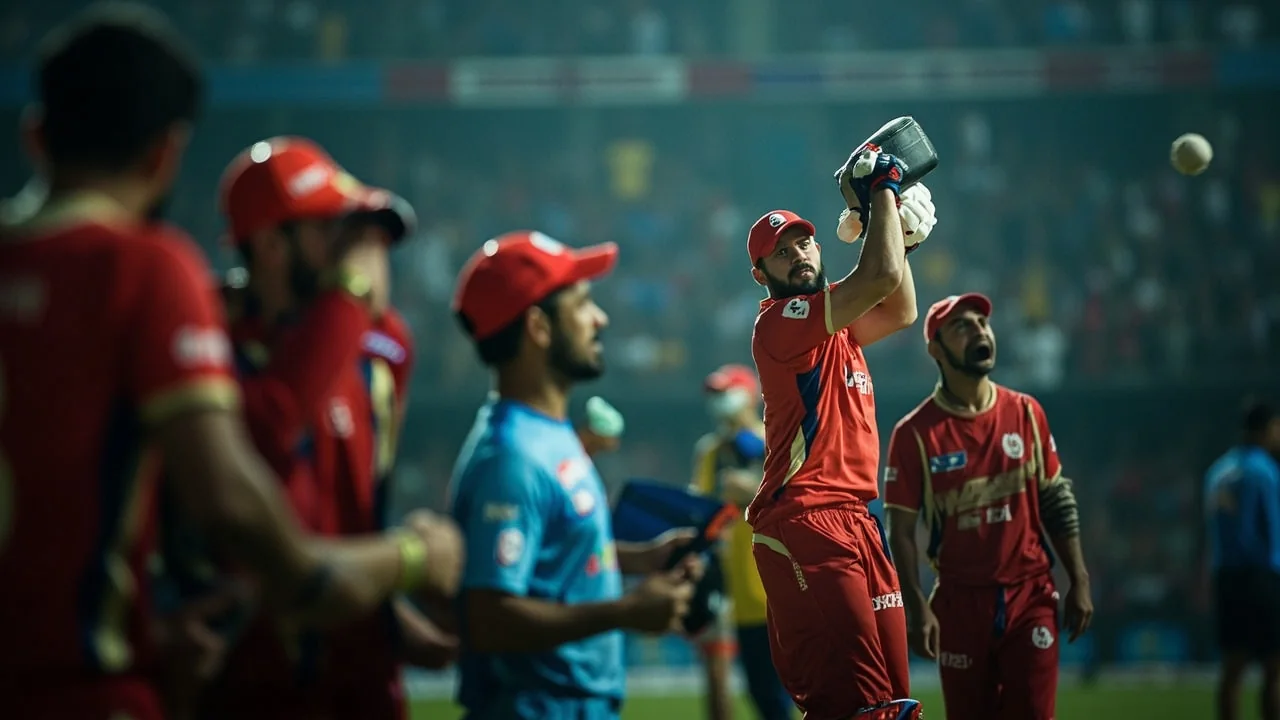
Player milestones — 100 IPL matches, 1000 IPL runs, 100 IPL wickets, a first cap, a first international call-up — generate headlines, but their fantasy value is in what they tell the manager about a player's role, not in the milestone itself. A bowler who takes his 100th IPL wicket in his 90th match has been bowling the death; a bowler who takes his 100th in his 130th match has been bowling the powerplay. The same milestone, two very different roles.
Milestones are most useful as a check on the role read that drives the rest of the fantasy decision. If the manager has tagged a player as a powerplay batter and the milestones suggest middle-order finishes, the tag is wrong and the captaincy decisions built on top of it are wrong too. Used as a check, milestones are cheap; treated as the headline, they are noise.
What fantasy managers actually use
Three habits do most of the work. First, track the retention list as it lands — the floor of the squad is set there, not at the auction. Second, treat the fitness review window as a buy signal for the replacement and a sell signal for the injured player, not the other way around. Third, treat the impact-player slot as a second captain and price the differential accordingly. Each habit costs a few minutes per match week and removes most of the variance that novice fantasy managers blame on luck.
The wider point is that the IPL player market is not a single market. It is six overlapping markets with six different rules, six different price ceilings and six different reversal conditions. The manager who reads the calendar reads the markets separately and ends up with a more useful read than the manager who treats the auction as the whole story. The full editorial note on role categories, captain sweet spots and ownership thresholds sits inside the IPL players explainer.
Frequently asked questions
The retention window opens roughly four to six weeks before the scheduled auction date. Mega-auction years reset the entire pool, and non-mega years allow a smaller number of retentions alongside Right to Match cards. Exact dates are issued by the BCCI each cycle.
A fitness review is the franchise's medical assessment of whether a player is cleared to play, restricted in workload or ruled out for the season. A mid-season replacement is the signing that follows if the review rules the player out for the season, subject to a price ceiling linked to the original player's auction price.
Each franchise names eleven players plus one impact player on the team sheet. Before the toss, the captain nominates one player from the eleven to be substituted by the impact player, with the constraint that the swap must be across roles. The substitution can be made regardless of match situation, although it is most often used during batting collapses or when the bowling attack needs a sixth option.
Milestones are most useful as a check on a player's role, not as the headline. A bowler who takes his 100th IPL wicket in his 90th match has been bowling the death; a bowler who takes his 100th in his 130th match has been bowling the powerplay. The same milestone, two very different roles — and the captaincy read follows the role, not the number.
The impact-player slot is usually the cheapest captaincy differential, because the player is named as an impact player in fewer than 5% of contest entries. A successful impact substitution produces a larger rank swing than a same-role captain pick would, and the most reliable read is to check the venue, the toss and the likely bowling workload before the substitution.
Filed by IPL Live Fantasy editorial desk · 6 August 2026 · Reference explainer, evergreen.