Jaffna Kings and Colombo Strikers meet in Match 7 of the Lanka Premier League 2026 at Rangiri International Stadium, Dambulla, on 22 July. Fixture listings put the start at 3:00 PM IST, with live coverage on Fancode. That is the confirmed shell of the day. Everything else — form lines, venue averages, win models, probable elevens — needs to be read as attributed reporting or labelled estimate, not as settled fact.
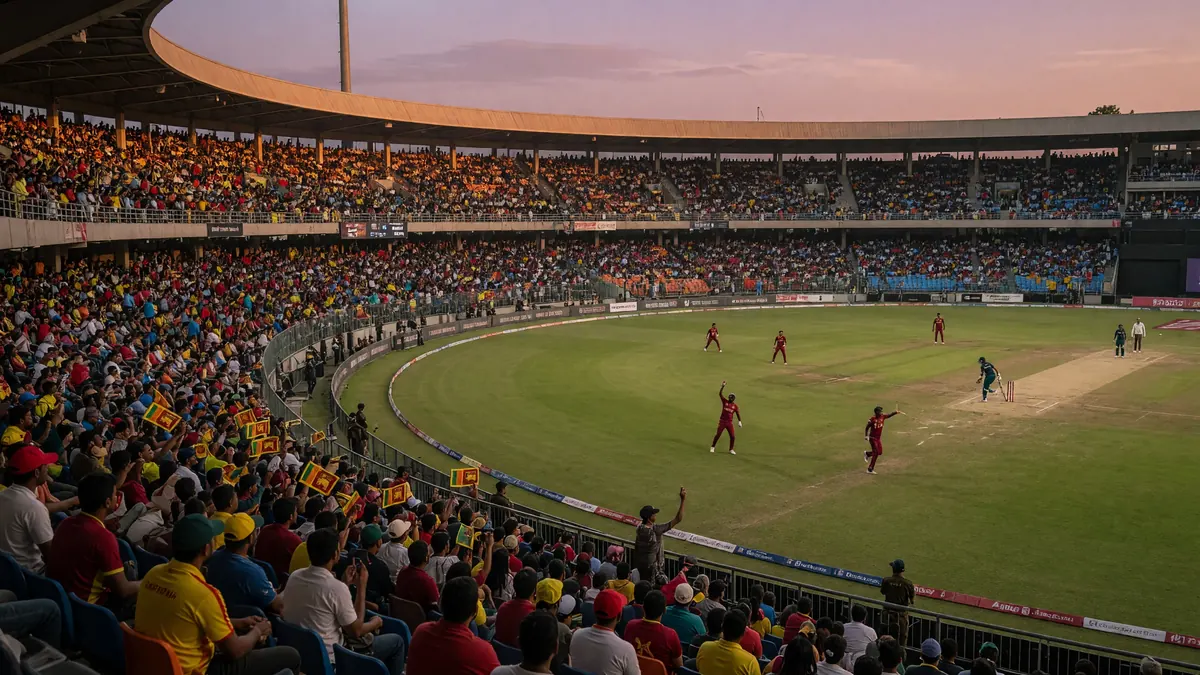
According to a Cricket Winner match brief by Bhupender published on the morning of 22 July 2026, both franchises have played two league games, each with one win and one defeat, and each sits on two points. The same brief places Jaffna at the foot of the early table and Colombo in third on that shared tally. Jaffna’s most recent result, per that report, was a five-wicket win over Dambulla Sixers; Colombo’s was a six-wicket win over Kandy Falcons after an opening five-wicket defeat. Those two completed results are the hard base under any preview of Match 7.
For readers who follow Indian T20 cricket, the LPL window still matters. The player pool overlaps IPL scouting lists, and Sri Lankan surfaces often punish the same powerplay habits that work on flatter Indian decks. The useful question is not “who is destined to win,” but which confirmed results, venue history and early tournament returns actually support a lean — and which claims are only model output.
What the early results already show
Strip away the packaging and the table is simple. Two sides, two points each, one win each. The Cricket Winner brief’s recent-form table lists Jaffna’s last-five line as win, loss, win, win, loss and Colombo’s as win, loss, loss, loss, win. Those sequences mix this season with the prior sample the publisher chose; they are not a certified official board. They do, however, match the tone of the confirmed 2026 results: neither side has locked a method, and neither has collapsed.
The same brief’s injury note says both camps report fully fit squads for Match 7. That claim is not independently verified here against team medical bulletins. Treat it as the publisher’s pre-match update. If it holds through the toss window, combination choice replaces forced replacement as the main selection story.
Head-to-head history in the same brief still belongs to Jaffna: eight wins to Colombo’s two across the last ten meetings, with no no-results in that cut. Historical dominance is real pressure in a dressing room. It is not a locked script for a single July afternoon when both top orders are still finding their 2026 rhythm.
Dambulla numbers — and where they come from
The Cricket Winner pitch box for Rangiri International Stadium is blunt: this is not described as a batting paradise; batters are said to need time; spinners get a share of the overs. The publisher’s venue averages are listed as about 191 for the first innings and about 179 for the second. The same box gives a batting-first win share near 40 percent and a bowling-first share near 60 percent. A separate weather panel in that brief lists temperature around 25°C and a rain possibility near 60 percent, with spinners flagged as the better-suited attack type at roughly 52 percent of the role split the publisher uses.
Those figures are not official board averages reproduced from a primary data dump here. They are the numbers published in the Cricket Winner Match 7 brief and should be read that way. Even on that basis, the practical reading is clear enough for planning: set batters matter more than hit-and-hope arrivals, spin is unlikely to be an afterthought, and a shortened game would compress value into the powerplay and the death.
| Signal from the Match 7 brief | Published reading | How to treat it |
|---|---|---|
| Average 1st innings | Around 191 | Publisher venue figure |
| Average 2nd innings | Around 179 | Publisher venue figure |
| Win batting first | About 40% | Publisher venue split |
| Win bowling first | About 60% | Publisher venue split |
| Weather panel | ~25°C, rain chance near 60% | Forecast snapshot in brief |
| Role lean | Spinner share near half | Publisher condition tag |
A second historical cut in the same brief covers 29 T20Is at Rangiri: teams bowling first won 16, teams batting first won 13. That is a mild chase lean, not a landslide. It supports captains who prefer to bowl first when the outfield is honest and the forecast is messy. It does not justify stating that any named side “will” win the toss. Toss winners are not knowable before the coin lands; any such line is speculation and is not used here as a fact.
Early tournament load-bearers
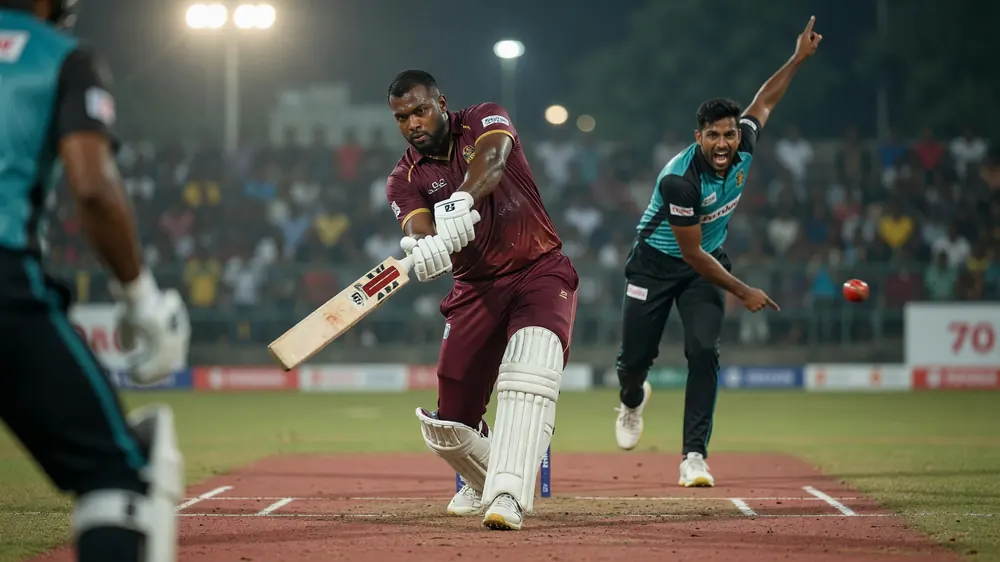
The Cricket Winner key-player table for this fixture lists the following tournament returns heading into Match 7: Kusal Mendis 81 runs and Ben McDermott 79 for Colombo; Bhanuka Rajapaksa 63 for Jaffna; Lizaad Williams five wickets for Jaffna; Hasan Mahmud five and Binura Fernando four for Colombo. Those are the publisher’s early tallies, not a full audited leaderboard reproduced from the league site. Still, the shape is useful: Colombo’s batting ledger is being carried by Mendis and McDermott, while Jaffna’s cleaner early punch has come with the ball through Williams.
That split explains the tactical tension. Colombo can look dangerous even on a sticky surface if Mendis manages tempo from the gloves and McDermott forces an early catcher. Jaffna’s answer is more likely to arrive through new-ball angle — Dilshan Madushanka and Williams are the names the brief keeps in the attack — and through a spin bank that, on the publisher’s probable eleven, includes Shakib Al Hasan, Piyush Chawla and Traveen Mathew. David Wiese remains the finisher who can change a death over with bat or ball if the match stays live past the fifteenth.
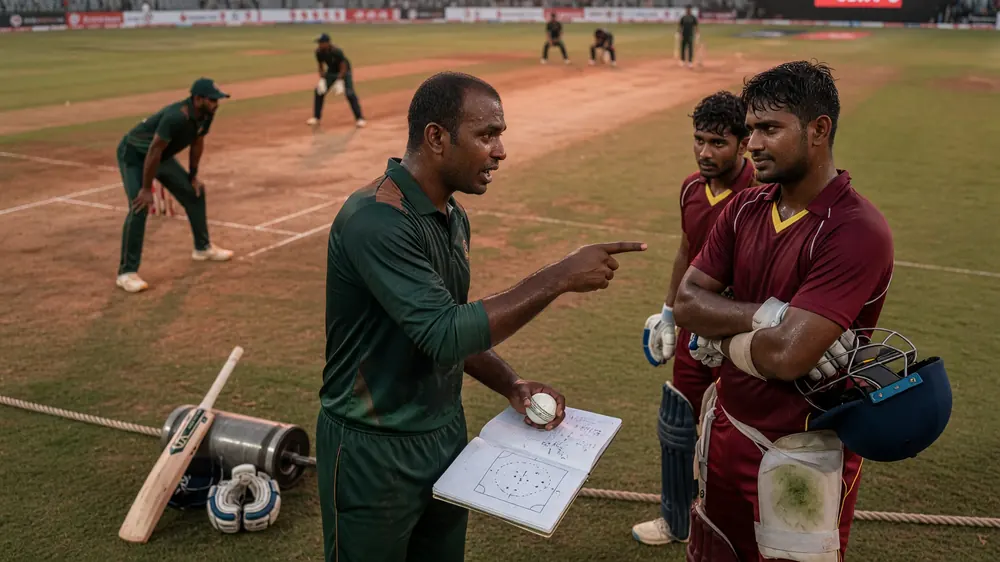
The same preview floats three player-of-the-match names before the toss: Kusal Mendis, Binura Fernando and Bhanuka Rajapaksa. That is a publisher shortlist, not a vote count or a betting market consensus. The trio maps onto plausible pivot points — top-order anchoring, left-arm control, captain’s counter-attack — but match awards follow the night, not the morning page.
Probable elevens are still only probable
Cricket Winner’s probable Colombo side for Match 7 reads: Rubin Hermann, Kusal Mendis (captain and wicketkeeper), Sadeera Samarawickrama, James Neesham, Janith Liyanage, Kamindu Mendis, Ben McDermott, Binura Fernando, Malsha Tharupathi, Mujeeb Ur Rahman and Hasan Mahmud. The same brief’s probable Jaffna side lists Avishka Fernando, Kamil Mishara (wicketkeeper), Bhanuka Rajapaksa (captain), Dunith Wellalage, David Wiese, Chamindu Wickramasinghe, Shakib Al Hasan, Piyush Chawla, Traveen Mathew, Dilshan Madushanka and Lizaad Williams.
Those are desk projections, not confirmed team sheets. Late changes at opener, fifth bowler or overseas slots are normal in franchise T20. Fantasy locks made before the toss should treat both lists as working templates and leave room for the official XI boards.
Readers who want a wider run of match notes and selection explainers can browse the full News & guides archive after the game.
Scenario bands, labelled as estimates
The Cricket Winner scenario table attaches score bands to each batting-first path. If Jaffna bat first, that table sketches a powerplay around 45–55 and a working total around 170–175. If Colombo bat first, the same table sketches a powerplay around 55–65 and a first-innings band around 185–200. The result labels inside that table are inconsistent on the publisher page itself (they point at other team codes), so this desk does not repeat those result calls as evidence. Only the score bands are useful, and only as planning ranges drawn from that brief.
Read as editorial estimates with a simple basis — early tournament batting returns plus the publisher’s own venue averages — the bands still have a point. Colombo’s top-order floor looks slightly higher on the reported Mendis and McDermott tallies. Jaffna’s bowling depth, if the probable spin bank holds, looks better built for a long defensive squeeze when the total stays moderate. A single early direct-hit or a wet ball under lights can erase a five-run model gap in two overs. The bands are tools for reading phases, not promises of a final score.
Win models and the narrow lean
Cricket Winner’s win-probability table for Match 7 lists Colombo around 52 percent and Jaffna around 48 percent. That is the publisher’s model output for this fixture, not an official market settlement and not an independent simulation run by this desk. A four-point gap is effectively a coin toss with a slight lean. The lean tracks the brief’s reading of Colombo’s recovery win and the stronger early batting returns from Mendis and McDermott rather than any proven structural gap in bowling depth.
On that attributed base, the responsible pre-match line is narrow: Colombo Strikers as marginal favourites on the publisher’s own model, especially if the chase lean at Dambulla holds and their top order stays intact. Jaffna remain fully live if Rajapaksa finds the middle early or if Williams strikes twice with the new ball. Anything bolder than that overstates what two games of 2026 form can prove.
What fantasy readers should actually wait for
Captain value still concentrates at the top when a surface asks for time. On the reported returns, Kusal Mendis is the cleanest Colombo anchor while also keeping wicket, which stacks two scoring channels in one salary slot if the format rewards both. McDermott is the pure upside alternative if you expect a shorter game or a truer pitch. For Jaffna, Rajapaksa remains the safer batting multiplier once the ball is older, while Avishka Fernando is the preference only if you are predicting a clean powerplay without early wickets — a preference, not a confirmed role lock.
On the ball, Lizaad Williams and Hasan Mahmud are the strike options most likely to deliver across phases rather than in a single spell, again on the early wicket tallies in the brief. Binura Fernando’s left-arm angle is a quiet differential when Dambulla holds. All-rounders Shakib Al Hasan, Dunith Wellalage and James Neesham fill the flexible slots; the right choice depends on whether the night runs to 20 overs or is trimmed by rain. Avoid overloading pure death hitters until the toss is known. On a ground where batters need time, the set batter’s long stay still outscores a three-ball cameo more often than highlight packages suggest.
Next checkpoint: toss and confirmed XIs
The next verifiable development is the on-field toss and the release of both confirmed XIs, due in the pre-match window shortly before the scheduled 3:00 PM IST start at Rangiri International Stadium. That is the first hard update after this preview: captains will choose bat or bowl, and probable elevens become locked teams. Until those two boards are public, any fantasy lock-in still carries late-change risk on openers and the fifth bowling option.
Once the toss is called, three early signals will matter more than the morning model. First, whether the side that wins the toss actually bowls first — the call that either trusts Dambulla’s published chase lean or rejects it. Second, whether Jaffna keep the full spin bank named in the probable list or trade one spinner for extra pace. Third, the powerplay wicket count in the first six overs, which still decides whether a 190-total stays live on the venue figures the brief cites.
Live coverage is listed on Fancode from the 3:00 PM IST start. Treat the toss announcement as the cut-off for XI changes, then watch the first bowling change after the sixth over for how each captain is reading grip under the Dambulla cloud cover. The match result itself will be the only clean verdict on every model line printed this morning.